

Legal Framework, Investment Security, and Why Hurghada Is Leading the Opportunity
Over the past few years, Egypt has become one of the most attractive emerging real estate markets for foreign buyers — particularly along the Red Sea coast.
With competitive pricing, direct European flight access, and year-round climate stability, cities like Hurghada are drawing increasing interest from investors seeking second homes, lifestyle properties, and long-term capital appreciation.
However, one question consistently arises:
Can foreigners legally own property in Egypt?
The answer is yes — but understanding the legal structure, procedures, and best practices is essential.
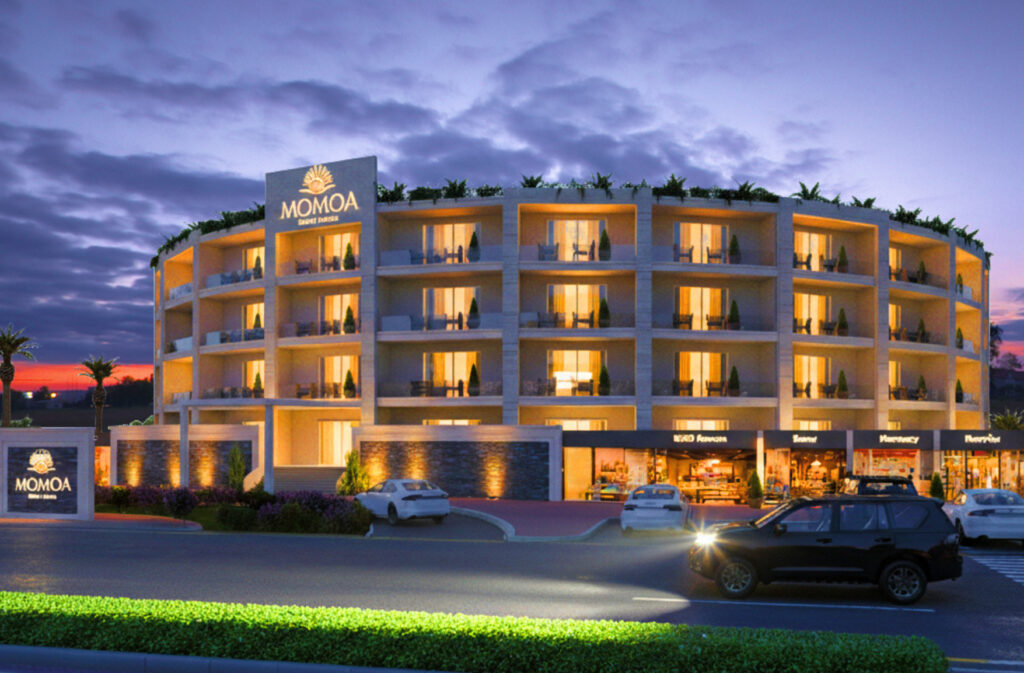
In this guide, we break down everything international buyers need to know in 2026, and why developments such as Momoa Beach Resort are structured to align with international investor expectations.
1. Can Foreigners Own Property in Egypt?
Yes.
Under Egyptian law, foreigners are permitted to own property in Egypt, subject to specific regulations.
Key points include:
• Foreign individuals may own up to two properties
• Each property must not exceed 4,000 square meters
• Ownership must comply with national security considerations
• Land ownership regulations differ slightly from apartment ownership
In practice, the majority of foreign buyers in Hurghada purchase residential units within resort-style developments — which fall under standard ownership frameworks.
2. Freehold vs. Contractual Ownership
In Egypt, there are two primary structures:
Freehold Ownership
This grants full ownership rights over the property. It is transferable, inheritable, and can be resold.
Contract-Based Ownership
In some developments, ownership may initially be contractual until final registration processes are completed.
Reputable developments — including Momoa Beach Resort — structure contracts transparently and clarify ownership status within documentation.
For European investors, clarity in contract language and registration process is critical.
3. Property Registration in Egypt
Property registration can follow two routes:
- Court Registration (Traditional Method)
- Registration at Real Estate Registry Office (Modern Method)
While full registration provides maximum legal protection, many resort developments operate under structured developer contracts during early phases — with clear pathways toward final registration.
What matters most is:
• Clear land ownership documentation
• Verified developer rights
• Transparent contract terms
• Payment documentation
Projects backed by structured development governance significantly reduce legal uncertainty.
4. Why Hurghada Is Popular Among Foreign Buyers
Hurghada has become the primary Red Sea destination for foreign ownership for several reasons:
A. Established International Community
The city has a long-standing German, Polish, British, Dutch, and Scandinavian resident presence.
B. Direct Accessibility
Year-round direct flights connect Hurghada to major European cities within 4–5 hours.
C. Competitive Entry Pricing
Compared to Mediterranean destinations, Hurghada offers significantly lower acquisition costs.
D. Climate Advantage
365 days of sun, warm winters, and low rainfall increase rental and usage potential.
Developments such as Momoa Beach Resort are positioned to serve this growing international demographic.
5. What Foreign Buyers Should Check Before Purchasing
Before investing in Egyptian real estate, buyers should verify:
1. Developer Reputation
Track record, transparency, and delivery capability.
2. Land Documentation
Clear ownership of land by the developer.
3. Payment Structure
Flexible plans are common — but clarity in terms is essential.
4. Construction Timeline
Phased development schedules must be realistic.
5. Exit Strategy
Consider resale potential and rental demand.
Projects that combine structured governance and low-density planning — such as Momoa Beach Resort — tend to offer stronger long-term positioning.
6. Rental Income for Foreign Owners
Foreign property owners in Hurghada commonly benefit from:
• Short-term holiday rentals
• Winter long-stay rentals
• Remote worker stays
• Sports tourism (kite surfing & diving)
While rental returns vary depending on management structure and seasonality, integrated resorts with lifestyle offerings often outperform standalone apartment buildings.
Momoa Beach Resort’s integration of watersports, equestrian facilities, and beachfront dining increases its appeal to lifestyle-driven renters.
7. Taxes & Costs for Foreign Buyers
Foreign buyers should consider:
• Purchase tax and administrative fees
• Maintenance fees (varies by development)
• Utility setup
• Property management costs
Egypt does not impose excessive property taxation compared to European markets, which is one of its competitive advantages.
However, investors should always consult legal and financial advisors for personalized guidance.
8. Currency Considerations
One strategic advantage for European buyers is currency positioning.
When local currency is weaker relative to the euro, foreign investors gain purchasing power.
Some developments — including Momoa Beach Resort — allow euro-based payment structures, reducing exchange risk.
Currency advantage can significantly enhance long-term capital appreciation potential.
9. Is Now a Good Time to Buy in Hurghada?
Market timing depends on three indicators:
- Pricing relative to neighboring benchmarks
- Infrastructure development trajectory
- International demand trends
Currently:
• Hurghada pricing remains below Mediterranean benchmarks
• Tourism is recovering and expanding
• European demand for winter properties is rising
Early-phase developments often provide the strongest growth potential before full area maturity.
10. Why Structured Developments Matter
Not all projects are equal.
In emerging markets, structured governance becomes the differentiator.
Momoa Beach Resort positions itself through:
• Low-density master planning
• Sea-view guarantee positioning
• Lifestyle integration
• European-oriented management approach
These factors reduce speculative risk and increase perceived long-term value stability.
11. Common Myths About Buying in Egypt
Myth 1: Foreigners cannot own property
False. Legal frameworks exist for ownership.
Myth 2: Registration is impossible
Incorrect. Structured processes exist, though timelines vary.
Myth 3: Rental income is unreliable
Not necessarily — especially in tourism-driven cities like Hurghada.
Understanding the market reduces uncertainty.
12. Long-Term Outlook for Foreign Ownership
Egypt continues to encourage foreign investment in real estate and tourism.
The Red Sea coast remains a national priority area for development.
As infrastructure expands and international branding strengthens, early investors in projects like Momoa Beach Resort may benefit from:
• Capital appreciation
• Rental demand growth
• Lifestyle usage flexibility
The key lies in disciplined project selection.
Final Thoughts
Buying property in Egypt as a foreigner is not only possible — it is increasingly strategic.
Hurghada stands at the forefront of this movement, offering accessibility, affordability, and climate advantage.
Projects such as Momoa Beach Resort reflect a new generation of Red Sea developments — combining lifestyle integration with structured governance.
For foreign buyers in 2026, the opportunity lies not in waiting for maturity — but in entering before it.